
Back
Present
Facts for Kids
A vacuum is a space that is completely empty of matter, which means there is nothing around, not even air!

Explore the internet with AstroSafe
Search safely, manage screen time, and remove ads and inappropriate content with the AstroSafe Browser.
Download

Become a Creator with DIY.org
A safe online space featuring over 5,000 challenges to create, explore and learn in.
Learn more
Overview
A vacuum is a cool place where there is no matter, which means no air, no water, and no solid stuff! 🌌
Imagine being in a room where there’s nothing around you—that's kind of like a vacuum! Vacuums can be found in space, like between planets and stars. The scientific studies about vacuums help us understand how the universe works! The word "vacuum" comes from Latin, meaning "empty." Learning about vacuums is important for astronauts 🚀 and scientists because it helps them explore outer space and even create new technologies here on Earth! 🌍
Imagine being in a room where there’s nothing around you—that's kind of like a vacuum! Vacuums can be found in space, like between planets and stars. The scientific studies about vacuums help us understand how the universe works! The word "vacuum" comes from Latin, meaning "empty." Learning about vacuums is important for astronauts 🚀 and scientists because it helps them explore outer space and even create new technologies here on Earth! 🌍
Read Less
Types of Vacuums
There are different kinds of vacuums! 🌟
The first type is a "low vacuum," which has some air but is mostly empty. Next, we have "medium vacuum," where there’s even less air! Finally, there's "high vacuum," which is super empty and doesn’t have nearly any air at all! 🌀
The vacuum in outer space is considered a high vacuum! Scientists create vacuums in labs for experiments, and they use different machines like vacuum pumps to make these spaces. Knowing about these types helps us use vacuums better in science and engineering! 🔧
The first type is a "low vacuum," which has some air but is mostly empty. Next, we have "medium vacuum," where there’s even less air! Finally, there's "high vacuum," which is super empty and doesn’t have nearly any air at all! 🌀
The vacuum in outer space is considered a high vacuum! Scientists create vacuums in labs for experiments, and they use different machines like vacuum pumps to make these spaces. Knowing about these types helps us use vacuums better in science and engineering! 🔧
Read Less
Creating a Vacuum
Creating a vacuum is exciting! 🚀
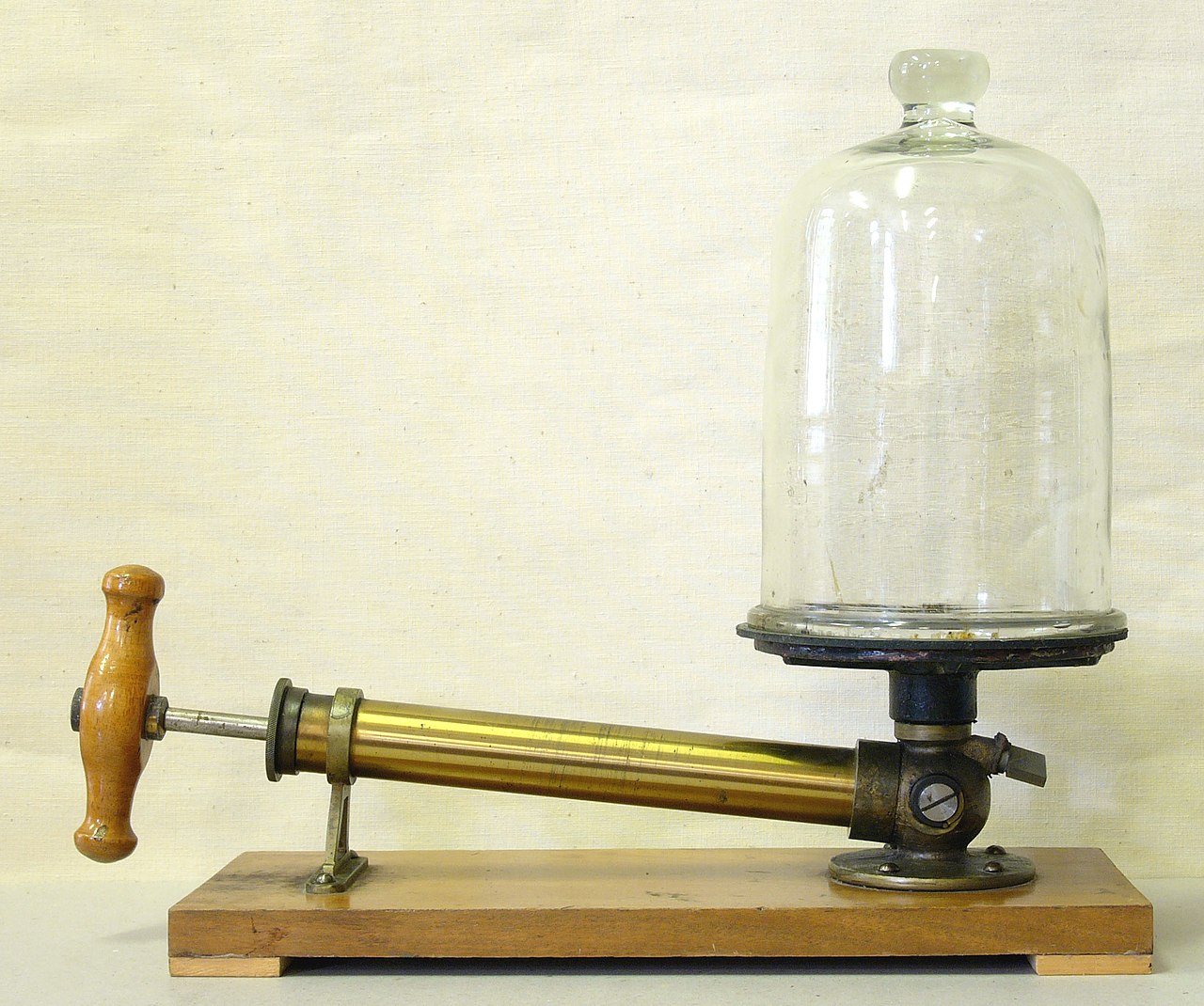
Scientists use special machines called vacuum pumps to remove air from a container. When the air is taken out, a vacuum is created! 🌀
Some cool experiments can happen in vacuums, like making things boil at low temperatures. In schools or labs, you might see a bell jar, a glass container where a vacuum is made to show how objects behave. It's fun to watch marshmallows puff up in a vacuum or how a candle goes out when the air is removed. These activities help explain how vacuums work in a hands-on way! 🔬
Scientists use special machines called vacuum pumps to remove air from a container. When the air is taken out, a vacuum is created! 🌀
Some cool experiments can happen in vacuums, like making things boil at low temperatures. In schools or labs, you might see a bell jar, a glass container where a vacuum is made to show how objects behave. It's fun to watch marshmallows puff up in a vacuum or how a candle goes out when the air is removed. These activities help explain how vacuums work in a hands-on way! 🔬
Read Less
The Physics of Vacuum
Physics explains how vacuums work! 🌍
One important rule is that without air pressure, things can move differently. For example, if you were in a vacuum and dropped a ball and a feather, they would fall at the same speed. Yay for science! 🧑
🔬 There’s also a principle called "vacuum energy," which is a mysterious form of energy that exists even when there aren't any particles around. Scientists try to understand this energy to learn more about how the universe functions! So in vacuum studies, physics helps us uncover the secrets of emptiness! 🔍
One important rule is that without air pressure, things can move differently. For example, if you were in a vacuum and dropped a ball and a feather, they would fall at the same speed. Yay for science! 🧑
🔬 There’s also a principle called "vacuum energy," which is a mysterious form of energy that exists even when there aren't any particles around. Scientists try to understand this energy to learn more about how the universe functions! So in vacuum studies, physics helps us uncover the secrets of emptiness! 🔍
Read Less
Vacuum in Outer Space
Outer space is one big vacuum! 🌌
This means that the area between planets, stars, and galaxies is almost empty, with very few particles around. Space has a low density of matter, making it a special place for scientists to study. For example, astronauts 🌠 travel through this vacuum when they explore the Moon or fix satellites. Because there is no air in space, astronauts need to wear special suits to protect themselves, just like superheroes! 🦸
♂️ Learning about vacuums in space helps us understand how our universe works and keeps us safe during exploration!
This means that the area between planets, stars, and galaxies is almost empty, with very few particles around. Space has a low density of matter, making it a special place for scientists to study. For example, astronauts 🌠 travel through this vacuum when they explore the Moon or fix satellites. Because there is no air in space, astronauts need to wear special suits to protect themselves, just like superheroes! 🦸
♂️ Learning about vacuums in space helps us understand how our universe works and keeps us safe during exploration!
Read Less
Definition of a Vacuum
A vacuum is a space that is completely empty of matter! This means that there are no particles like atoms or molecules. If you could stand in a vacuum, you wouldn’t feel air around you to breathe, and sounds would not travel! 🤫
Vacuums can be very strong, like in a science lab, or they can be natural, like in outer space. 🎇
Scientists measure how much of a vacuum is created using a tool called a "vacuum gauge," which tells us how empty a space is. Just remember: a vacuum is all about the emptiness!
Vacuums can be very strong, like in a science lab, or they can be natural, like in outer space. 🎇
Scientists measure how much of a vacuum is created using a tool called a "vacuum gauge," which tells us how empty a space is. Just remember: a vacuum is all about the emptiness!
Read Less
Properties of a Vacuum
A vacuum has some interesting properties! 🤔
First, there are no air molecules, which means sound cannot travel—it’s super quiet! Second, without air, things weigh less in a vacuum. Have you ever seen a feather and a hammer drop at the same time? 🪶🔨 In a vacuum, they hit the ground together because there's no air to slow them down! Additionally, temperatures can change quickly in vacuums, and they can create powerful forces that scientists use to their advantage! These properties help us explore space and develop technologies! 🌌
First, there are no air molecules, which means sound cannot travel—it’s super quiet! Second, without air, things weigh less in a vacuum. Have you ever seen a feather and a hammer drop at the same time? 🪶🔨 In a vacuum, they hit the ground together because there's no air to slow them down! Additionally, temperatures can change quickly in vacuums, and they can create powerful forces that scientists use to their advantage! These properties help us explore space and develop technologies! 🌌
Read Less
History of Vacuum Studies
The study of vacuums has a long history! 📜
A famous scientist named Evangelista Torricelli discovered the first vacuum in 1643 while making a barometer, which measures air pressure. He showed that when you fill a tube with mercury and turn it upside down, some of the mercury stays in the tube, creating a vacuum above it! Later, in the 1700s, scientists like Joseph Louis Gay-Lussac and Robert Boyle explored the properties of vacuums, helping us understand how they work. Today, thanks to their discoveries, we use vacuums in many technologies in our daily lives! 💡
A famous scientist named Evangelista Torricelli discovered the first vacuum in 1643 while making a barometer, which measures air pressure. He showed that when you fill a tube with mercury and turn it upside down, some of the mercury stays in the tube, creating a vacuum above it! Later, in the 1700s, scientists like Joseph Louis Gay-Lussac and Robert Boyle explored the properties of vacuums, helping us understand how they work. Today, thanks to their discoveries, we use vacuums in many technologies in our daily lives! 💡
Read Less
Applications of Vacuum Technology
Vacuum technology helps us in many ways! 🛠
️ One important use is in making electronics like TVs and computers. These gadgets often have vacuum tubes or parts that need a vacuum to work properly. Another great application is in space exploration: rockets use vacuums to test engines before they go into space! 🚀🥇 Additionally, vacuums keep food fresh for longer by removing air—this is called vacuum sealing! We also use vacuums in medicine, such as in certain types of surgeries and medical devices. These technologies make our lives easier and healthier! 🌱
️ One important use is in making electronics like TVs and computers. These gadgets often have vacuum tubes or parts that need a vacuum to work properly. Another great application is in space exploration: rockets use vacuums to test engines before they go into space! 🚀🥇 Additionally, vacuums keep food fresh for longer by removing air—this is called vacuum sealing! We also use vacuums in medicine, such as in certain types of surgeries and medical devices. These technologies make our lives easier and healthier! 🌱
Read Less
Common Misconceptions about Vacuums
Many people think vacuums are just empty spaces, but there’s more to it! 🌪
️ Some believe vacuums have “nothing” in them, but they still can contain tiny particles or energy! Another common misconception is that vacuums are cold, when in fact, they can vary in temperature. Plus, remember that vacuums don’t suck things in; they create a lack of pressure that lets atmospheric pressure push things in! 💨
Learning more about vacuums helps clear up these misunderstandings and broadens our knowledge about the universe and our planet! 🌈
️ Some believe vacuums have “nothing” in them, but they still can contain tiny particles or energy! Another common misconception is that vacuums are cold, when in fact, they can vary in temperature. Plus, remember that vacuums don’t suck things in; they create a lack of pressure that lets atmospheric pressure push things in! 💨
Learning more about vacuums helps clear up these misunderstandings and broadens our knowledge about the universe and our planet! 🌈
Read Less
Impacts of Vacuum on Biological Systems
Vacuum affects living things! 🌱
For example, if humans were exposed to a vacuum without protection, they wouldn't be able to breathe, which is very dangerous! 😲
Our bodies are used to normal air pressure, and a sudden change can cause problems. Plants also rely on vacuum-like spaces in their water systems to move water from roots to leaves. A vacuum can even affect tiny creatures like bacteria. To study how living organisms react to these conditions, scientists create controlled vacuum environments. This research helps us understand more about life and survival! 🌿
For example, if humans were exposed to a vacuum without protection, they wouldn't be able to breathe, which is very dangerous! 😲
Our bodies are used to normal air pressure, and a sudden change can cause problems. Plants also rely on vacuum-like spaces in their water systems to move water from roots to leaves. A vacuum can even affect tiny creatures like bacteria. To study how living organisms react to these conditions, scientists create controlled vacuum environments. This research helps us understand more about life and survival! 🌿
Read Less
Try your luck with the Vacuum Quiz.
Try this Vacuum quiz and see how many you score!
Q1
Question 1 of 10
Next
Explore More