
Back
Present
Facts for Kids
A tsunami is a series of large ocean waves typically caused by underwater earthquakes, volcanic eruptions, or landslides, and can lead to catastrophic coastal flooding and destruction.

Explore the internet with AstroSafe
Search safely, manage screen time, and remove ads and inappropriate content with the AstroSafe Browser.
Download

Become a Creator with DIY.org
A safe online space featuring over 5,000 challenges to create, explore and learn in.
Learn more
Overview
A tsunami is a massive ocean wave caused by underwater events like earthquakes, volcanic eruptions, or landslides. 🌊
They can travel across oceans at speeds over 500 miles per hour! Tsunamis are often mistaken for regular waves, but they are much taller and more powerful. They usually start with a sudden rise or fall of water, creating a wave that can reach heights of over 100 feet! 🌅
Tsunamis can cause a lot of damage when they hit coastal areas. People need to know about tsunamis to stay safe when they happen!
They can travel across oceans at speeds over 500 miles per hour! Tsunamis are often mistaken for regular waves, but they are much taller and more powerful. They usually start with a sudden rise or fall of water, creating a wave that can reach heights of over 100 feet! 🌅
Tsunamis can cause a lot of damage when they hit coastal areas. People need to know about tsunamis to stay safe when they happen!
Read Less
Causes of Tsunamis
Tsunamis are often caused by underwater earthquakes. 🏊
♂️ When the Earth’s tectonic plates shift, it can create a large disturbance in the water above. Other causes include volcanic eruptions, like the eruption of Krakatoa in 1883, and landslides, where rocks fall into the ocean. 🏔
️ Sometimes, even meteorite impacts can create waves! The energy from these events spreads through the water, forming long waves that can travel very far. 🌍
It's important to understand why tsunamis happen so we can prepare for them!
♂️ When the Earth’s tectonic plates shift, it can create a large disturbance in the water above. Other causes include volcanic eruptions, like the eruption of Krakatoa in 1883, and landslides, where rocks fall into the ocean. 🏔
️ Sometimes, even meteorite impacts can create waves! The energy from these events spreads through the water, forming long waves that can travel very far. 🌍
It's important to understand why tsunamis happen so we can prepare for them!
Read Less
Historical Tsunamis
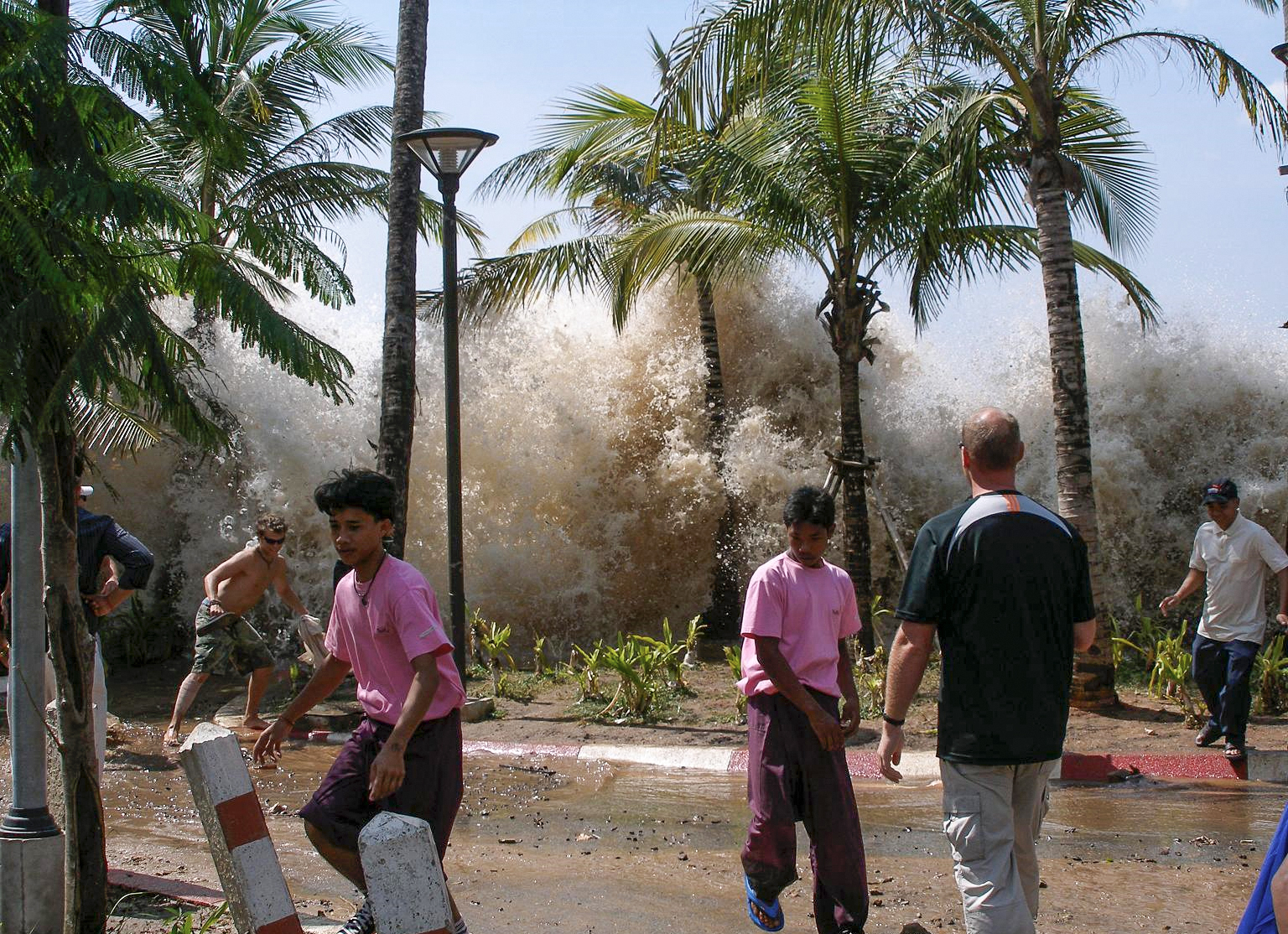
Many famous tsunamis have changed history. One of the deadliest was in 2004 when a massive earthquake struck off the coast of Indonesia. 🌏
It triggered a tsunami that affected countries like Thailand and India, causing over 230,000 deaths! Another significant tsunami happened in Japan in 2011, resulting from a powerful earthquake. 🎌
It caused damage to towns and the Fukushima nuclear plant! Historical tsunamis remind us of nature's power and the importance of being prepared. There are many lessons we can learn from them!
It triggered a tsunami that affected countries like Thailand and India, causing over 230,000 deaths! Another significant tsunami happened in Japan in 2011, resulting from a powerful earthquake. 🎌
It caused damage to towns and the Fukushima nuclear plant! Historical tsunamis remind us of nature's power and the importance of being prepared. There are many lessons we can learn from them!
Read Less
Tsunami in Popular Media
Tsunamis often appear in movies and cartoons! 🎥
Films like "The Impossible" tell stories of real-life tsunami disasters. Other movies show giant waves causing excitement and action, like in “San Andreas.” 🎬 Cartoons sometimes make the topic fun and interesting for kids, like when characters face water challenges. 🌊
These depictions, while exciting, can also help people understand the seriousness of tsunamis. Overall, media plays an important role in raising awareness about tsunamis and their impact on society and the environment! 🌍
Films like "The Impossible" tell stories of real-life tsunami disasters. Other movies show giant waves causing excitement and action, like in “San Andreas.” 🎬 Cartoons sometimes make the topic fun and interesting for kids, like when characters face water challenges. 🌊
These depictions, while exciting, can also help people understand the seriousness of tsunamis. Overall, media plays an important role in raising awareness about tsunamis and their impact on society and the environment! 🌍
Read Less
Cultural Impact of Tsunamis
Tsunamis have influenced cultures around the world, from legends to art. 🎨
In Japan, there are many stories about the “Dragon King” that control water and storms. Tsunamis have also inspired festivals and remembrance ceremonies for affected communities. 🌸
In addition, movies, music, and books often portray tsunamis as dramatic events. These cultural expressions help to teach people about tsunamis and their effects. Communities remember and honor those who have been impacted, creating stronger bonds. 💕
Stories help us learn and prepare for the future!
In Japan, there are many stories about the “Dragon King” that control water and storms. Tsunamis have also inspired festivals and remembrance ceremonies for affected communities. 🌸
In addition, movies, music, and books often portray tsunamis as dramatic events. These cultural expressions help to teach people about tsunamis and their effects. Communities remember and honor those who have been impacted, creating stronger bonds. 💕
Stories help us learn and prepare for the future!
Read Less
Scientific Research on Tsunamis
Scientists study tsunamis to understand how they form and how to predict them better. 🧑
🔬 They analyze past tsunamis to learn more about their patterns. Advanced technology like satellites and computer models help scientists see how waves move across oceans. 📈
They work to develop better warning systems and improve safety measures for coastal communities. Collaboration between scientists, engineers, and governments is vital to keep people informed and safe. 🔍
Research helps us be ready for future tsunamis, making the world a safer place!
🔬 They analyze past tsunamis to learn more about their patterns. Advanced technology like satellites and computer models help scientists see how waves move across oceans. 📈
They work to develop better warning systems and improve safety measures for coastal communities. Collaboration between scientists, engineers, and governments is vital to keep people informed and safe. 🔍
Research helps us be ready for future tsunamis, making the world a safer place!
Read Less
Tsunami Safety and Preparedness
Being safe during a tsunami is very important! 🏃
♂️ People living near the coast should know where to go if a tsunami warning is issued. If you hear a siren or see an alert, move to higher ground quickly! 🏔
️ It’s a good idea to have an emergency kit with food, water, and first aid supplies ready just in case. Families can practice drills to be ready. It's also smart to learn about local evacuation routes. Preparation and knowing what to do can save lives when a tsunami strikes! 👨
👩👧👦
♂️ People living near the coast should know where to go if a tsunami warning is issued. If you hear a siren or see an alert, move to higher ground quickly! 🏔
️ It’s a good idea to have an emergency kit with food, water, and first aid supplies ready just in case. Families can practice drills to be ready. It's also smart to learn about local evacuation routes. Preparation and knowing what to do can save lives when a tsunami strikes! 👨
👩👧👦
Read Less
Tsunami Detection and Prediction
Scientists use special equipment to detect tsunamis. 🌐
One key tool is the tsunami buoy, which floats on the ocean's surface. These buoys can measure changes in water levels and send information to scientists. ⚓
When an underwater earthquake occurs, scientists quickly check the data. If they think a tsunami might happen, they can warn people living near the coast. Tsunami warning systems are very important because they can save lives! 🚨
It's like having a superhero team keep watch over the oceans!
One key tool is the tsunami buoy, which floats on the ocean's surface. These buoys can measure changes in water levels and send information to scientists. ⚓
When an underwater earthquake occurs, scientists quickly check the data. If they think a tsunami might happen, they can warn people living near the coast. Tsunami warning systems are very important because they can save lives! 🚨
It's like having a superhero team keep watch over the oceans!
Read Less
Tsunami Effects on Coastal Areas
When tsunamis reach the coast, they can cause huge destruction. 🌊
Buildings, trees, and cars can get swept away! The water can flood homes and streets, leading to serious damage. 🌆
Tsunamis can also wash away beaches and change the shape of the coastline. After a tsunami, it can take years for areas to recover and rebuild. 🌳
Wildlife and plants can be affected, too, so it's important to be careful and clean up. People need to help each other after a tsunami hits to rebuild their communities!
Buildings, trees, and cars can get swept away! The water can flood homes and streets, leading to serious damage. 🌆
Tsunamis can also wash away beaches and change the shape of the coastline. After a tsunami, it can take years for areas to recover and rebuild. 🌳
Wildlife and plants can be affected, too, so it's important to be careful and clean up. People need to help each other after a tsunami hits to rebuild their communities!
Read Less
Try your luck with the Tsunami Quiz.
Try this Tsunami quiz and see how many you score!
Q1
Question 1 of 10
Next
Explore More