
Back
Present
Facts for Kids
Quantum dots are nanoscale semiconductor materials that exhibit unique optical and electronic properties due to quantum mechanics, widely used in technology and science.

Explore the internet with AstroSafe
Search safely, manage screen time, and remove ads and inappropriate content with the AstroSafe Browser.
Download

Become a Creator with DIY.org
A safe online space featuring over 5,000 challenges to create, explore and learn in.
Learn more
Overview
Welcome to the amazing world of quantum dots! 🌈
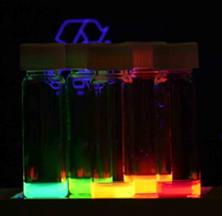
Quantum dots are tiny particles that are so small you can't see them with your eyes. They are about 1 to 100 nanometers wide, which is like a billionth of a meter! These little dots can glow in different colors when light shines on them. They are used in many cool technologies, like computer screens and televisions! 📺
Quantum dots help make these devices bright and colorful, making our experience much more fun. Scientists all over the world are studying quantum dots for more exciting uses! 🌍✨
Quantum dots are tiny particles that are so small you can't see them with your eyes. They are about 1 to 100 nanometers wide, which is like a billionth of a meter! These little dots can glow in different colors when light shines on them. They are used in many cool technologies, like computer screens and televisions! 📺
Quantum dots help make these devices bright and colorful, making our experience much more fun. Scientists all over the world are studying quantum dots for more exciting uses! 🌍✨
Read Less
How Quantum Dots Work
Quantum dots work like magic lights! ✨
When they are hit by light, they absorb and release it. This process is called photoluminescence. Imagine playing catch—you throw a ball 🏐, and when someone catches it, they throw it back. Similarly, quantum dots catch light and then re-throw it as color! The band gap of the quantum dot determines what color it will glow. The band gap is like the amount of energy they need to jump and shine! So, the size of the quantum dot affects the color, like how different-sized balls can bounce higher or lower!
When they are hit by light, they absorb and release it. This process is called photoluminescence. Imagine playing catch—you throw a ball 🏐, and when someone catches it, they throw it back. Similarly, quantum dots catch light and then re-throw it as color! The band gap of the quantum dot determines what color it will glow. The band gap is like the amount of energy they need to jump and shine! So, the size of the quantum dot affects the color, like how different-sized balls can bounce higher or lower!
Read Less
Types of Quantum Dots
Did you know there are different kinds of quantum dots? 🎨
The most common types include semiconductor quantum dots like cadmium selenide (CdSe) and lead sulfide (PbS). Each type has unique properties and colors. For example, you could find CdSe glowing red and PbS glowing infrared! Scientists also create special types of quantum dots that are biocompatible, which means they are safe for living organisms. 🦠
This helps scientists study cells under microscopes! Each quantum dot is like a special character in a superhero movie, with its own unique powers!
The most common types include semiconductor quantum dots like cadmium selenide (CdSe) and lead sulfide (PbS). Each type has unique properties and colors. For example, you could find CdSe glowing red and PbS glowing infrared! Scientists also create special types of quantum dots that are biocompatible, which means they are safe for living organisms. 🦠
This helps scientists study cells under microscopes! Each quantum dot is like a special character in a superhero movie, with its own unique powers!
Read Less
What are Quantum Dots?
Quantum dots are tiny bits of materials, often made from metals or semi-conductors. They are like super-small Lego blocks! 🧱
Our eyes can see colors like red, blue, and green because of how these quantum dots interact with light. When you shine light on them, they absorb it and re-emit it in different colors. For example, a quantum dot made from cadmium selenide can glow bright red! 🌟
These special colors depend on the size of the quantum dot, making them unique little particles in the world of science!
Our eyes can see colors like red, blue, and green because of how these quantum dots interact with light. When you shine light on them, they absorb it and re-emit it in different colors. For example, a quantum dot made from cadmium selenide can glow bright red! 🌟
These special colors depend on the size of the quantum dot, making them unique little particles in the world of science!
Read Less
History of Quantum Dots
The discovery of quantum dots began in the early 1980s in the USA! 🇺🇸 Scientists like Alexei Ekimov and Louis Brus were the first to study these tiny particles. Their work helped people understand how small materials behave differently from larger ones. In 1993, scientists made the first quantum dot light-emitting diodes (LEDs)! 🎉
This was a big step in technology. Since then, researchers all over the globe have been finding new ways to use quantum dots, making changes in medicine, electronics, and more!
This was a big step in technology. Since then, researchers all over the globe have been finding new ways to use quantum dots, making changes in medicine, electronics, and more!
Read Less
Quantum Dots in Medicine
Quantum dots are becoming heroes in medicine! 🦸
♂️ They help doctors find diseases like cancer by glowing when they are near sick cells. By attaching them to medicines, doctors can track where the medicine goes in the body! Imagine shining a flashlight 🔦 on a treasure map; quantum dots act like that flashlight, showing us the right path in healing. Researchers are exploring using quantum dots for imaging, making it easier to see what’s happening inside our bodies. Every day, new discoveries are being made to improve health thanks to these tiny wonders!
♂️ They help doctors find diseases like cancer by glowing when they are near sick cells. By attaching them to medicines, doctors can track where the medicine goes in the body! Imagine shining a flashlight 🔦 on a treasure map; quantum dots act like that flashlight, showing us the right path in healing. Researchers are exploring using quantum dots for imaging, making it easier to see what’s happening inside our bodies. Every day, new discoveries are being made to improve health thanks to these tiny wonders!
Read Less
Challenges and Limitations
Even with all their cool uses, quantum dots face some challenges. 😟
For example, some quantum dots contain materials that can be unsafe if they leak into the environment. Scientists are working hard to find safer options! Another issue is that quantum dots can lose their brightness over time, like a faded color in your favorite painting. 🎨
Researchers are trying to make sure these tiny dots can shine bright longer. With teamwork and innovation, scientists are overcoming these hurdles to make quantum dots even better!
For example, some quantum dots contain materials that can be unsafe if they leak into the environment. Scientists are working hard to find safer options! Another issue is that quantum dots can lose their brightness over time, like a faded color in your favorite painting. 🎨
Researchers are trying to make sure these tiny dots can shine bright longer. With teamwork and innovation, scientists are overcoming these hurdles to make quantum dots even better!
Read Less
Applications of Quantum Dots
Quantum dots are super useful! 🌟
They are used in televisions and computer screens to make colors brighter and clearer. You can find them in your favorite gadgets, helping images pop out! They also have applications in solar cells, which help capture sunlight to make electricity. ☀
️ Beyond screens and energy, quantum dots are used in sensors that can detect diseases! This means they help doctors know how to make us better when we are sick. These tiny dots have brought many exciting advancements to everyday life!
They are used in televisions and computer screens to make colors brighter and clearer. You can find them in your favorite gadgets, helping images pop out! They also have applications in solar cells, which help capture sunlight to make electricity. ☀
️ Beyond screens and energy, quantum dots are used in sensors that can detect diseases! This means they help doctors know how to make us better when we are sick. These tiny dots have brought many exciting advancements to everyday life!
Read Less
Quantum Dots and Sustainability
Quantum dots can even help Earth stay healthy! 🌍
By enhancing solar cells, they make it easier to catch sunlight and turn it into clean energy. ☀
️ This helps reduce pollution and protect our planet! Scientists are also working on creating quantum dots that are made from eco-friendly materials. 🌱
Cool, right? With more people focusing on sustainability, the applications of quantum dots could lead to a greener future. Together, we can make sure our planet stays beautiful for everyone! 🌼
By enhancing solar cells, they make it easier to catch sunlight and turn it into clean energy. ☀
️ This helps reduce pollution and protect our planet! Scientists are also working on creating quantum dots that are made from eco-friendly materials. 🌱
Cool, right? With more people focusing on sustainability, the applications of quantum dots could lead to a greener future. Together, we can make sure our planet stays beautiful for everyone! 🌼
Read Less
Future Directions in Quantum Dot Research
The future of quantum dots is exciting! 🌈
Researchers are exploring using them for even more things, like making better solar cells and improving computer technology. Imagine having computers that are super-fast and super-bright! 🖥
️ Scientists are also looking into how quantum dots can help with faster internet by transmitting data at lightning speed! ⚡
These tiny dots are paving the way for new discoveries that can change our world, and who knows what amazing things await us in the years to come?
Researchers are exploring using them for even more things, like making better solar cells and improving computer technology. Imagine having computers that are super-fast and super-bright! 🖥
️ Scientists are also looking into how quantum dots can help with faster internet by transmitting data at lightning speed! ⚡
These tiny dots are paving the way for new discoveries that can change our world, and who knows what amazing things await us in the years to come?
Read Less
Try your luck with the Quantum Dots Quiz.
Try this Quantum Dots quiz and see how many you score!
Q1
Question 1 of 10
Next
Explore More