
Back
Present
Facts for Kids
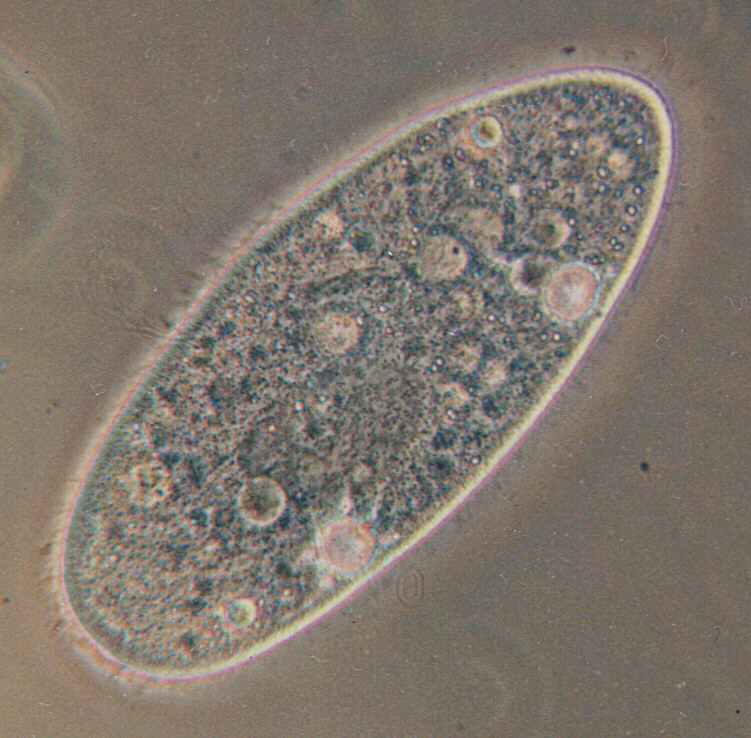
Paramecium is a tiny, eukaryotic, unicellular organism with a slipper shape, covered in cilia, commonly found in freshwater environments.

Explore the internet with AstroSafe
Search safely, manage screen time, and remove ads and inappropriate content with the AstroSafe Browser.
Download

Become a Creator with DIY.org
A safe online space featuring over 5,000 challenges to create, explore and learn in.
Learn more
Overview
Paramecium is a tiny, one-celled creature that you can find swimming in freshwater, like ponds! 🏞
️ It has a distinctive slipper shape and is covered in tiny hair-like structures called cilia. These cilia help it move and also help to eat by pushing food into its mouth. Did you know that Paramecium can be as small as 0.1 mm? That’s smaller than a grain of sand! 🌊
There are many species of Paramecium, and they usually live in groups often called colonies, which makes them even more fun to study!
️ It has a distinctive slipper shape and is covered in tiny hair-like structures called cilia. These cilia help it move and also help to eat by pushing food into its mouth. Did you know that Paramecium can be as small as 0.1 mm? That’s smaller than a grain of sand! 🌊
There are many species of Paramecium, and they usually live in groups often called colonies, which makes them even more fun to study!
Read Less
Role in Ecosystems
Paramecium plays an important role in the ecosystem! 🌿
They are a food source for larger organisms, such as small fish and other protists. In turn, they help keep bacteria levels in check, which is essential for clean water. Paramecium also contributes to breaking down organic matter, helping recycle nutrients back into the environment! 🌍
By keeping the ecosystem balanced, Paramecium is a tiny but mighty ally in nature.
They are a food source for larger organisms, such as small fish and other protists. In turn, they help keep bacteria levels in check, which is essential for clean water. Paramecium also contributes to breaking down organic matter, helping recycle nutrients back into the environment! 🌍
By keeping the ecosystem balanced, Paramecium is a tiny but mighty ally in nature.
Read Less
Feeding and Nutrition
Paramecium is a hungry little creature! 🍽
️ It eats tiny organisms like bacteria, algae, and yeast. The food is swept into the oral groove by the cilia, much like using a broom! Once inside, the food is broken down in special food vacuoles. These vacuoles digest the food and provide energy for the Paramecium to swim and grow. 🌟
Paramecium needs a variety of nutrients to stay healthy, and luckily, it can find plenty in the water.
️ It eats tiny organisms like bacteria, algae, and yeast. The food is swept into the oral groove by the cilia, much like using a broom! Once inside, the food is broken down in special food vacuoles. These vacuoles digest the food and provide energy for the Paramecium to swim and grow. 🌟
Paramecium needs a variety of nutrients to stay healthy, and luckily, it can find plenty in the water.
Read Less
Structure and Anatomy
Paramecium has a cool structure! 🤔
It has a tough outer layer called the pellicle that protects its shape. This slipper-shaped body is surrounded by cilia, which they use to swim and capture food. Inside, Paramecium has a complex structure, including contractile vacuoles that help it manage water and food particles. 🥤
It even has a mouth-like opening called the oral groove where food enters, and it has a special place for its nucleus, which controls everything the cell does!
It has a tough outer layer called the pellicle that protects its shape. This slipper-shaped body is surrounded by cilia, which they use to swim and capture food. Inside, Paramecium has a complex structure, including contractile vacuoles that help it manage water and food particles. 🥤
It even has a mouth-like opening called the oral groove where food enters, and it has a special place for its nucleus, which controls everything the cell does!
Read Less
Movement and Locomotion
Have you ever seen a Paramecium dance? 💃
They move by beating their cilia in a coordinated way! This movement allows them to swim smoothly through the water. Paramecium can change direction quickly—if they hit something or feel danger, they can reverse and swim away! 🏃
♂️ Cilia can also help them stay in one place, making it easier to eat. Swirling and twirling, Paramecium is like a tiny ballet dancer of the pond!
They move by beating their cilia in a coordinated way! This movement allows them to swim smoothly through the water. Paramecium can change direction quickly—if they hit something or feel danger, they can reverse and swim away! 🏃
♂️ Cilia can also help them stay in one place, making it easier to eat. Swirling and twirling, Paramecium is like a tiny ballet dancer of the pond!
Read Less
Habitat and Distribution
Paramecium loves water! 🐟
You can find it in ponds, lakes, rivers, and even in a bit of brackish water, which is a mix of freshwater and saltwater. They are found all around the world, from North America to Europe and Asia! 🌍
They like warm waters with plenty of organic matter, like decaying leaves and algae. Paramecium is very adaptable, so it can live in different conditions, which is why it is one of the most common microorganisms found in aquatic environments!
You can find it in ponds, lakes, rivers, and even in a bit of brackish water, which is a mix of freshwater and saltwater. They are found all around the world, from North America to Europe and Asia! 🌍
They like warm waters with plenty of organic matter, like decaying leaves and algae. Paramecium is very adaptable, so it can live in different conditions, which is why it is one of the most common microorganisms found in aquatic environments!
Read Less
Reproduction and Life Cycle
Paramecium can reproduce in two main ways! 🌱
The first way is called binary fission, where one Paramecium splits into two. This can happen every 2 to 3 hours when conditions are good! The second way is called conjugation, which is a little like a Paramecium party where two Paramecia exchange genetic material. 🎉
After this fun mixing, they can still divide and grow as new Paramecia. Their life cycle ensures that there are always energetic little Paramecia swimming about!
The first way is called binary fission, where one Paramecium splits into two. This can happen every 2 to 3 hours when conditions are good! The second way is called conjugation, which is a little like a Paramecium party where two Paramecia exchange genetic material. 🎉
After this fun mixing, they can still divide and grow as new Paramecia. Their life cycle ensures that there are always energetic little Paramecia swimming about!
Read Less
Comparison with Other Protists
Paramecium is part of the protist family, which includes other interesting creatures! 🦠
For example, amoebas change their shape, jelly-like shapes called amoeboid protists, while euglena are green and can perform photosynthesis! 🌱
In comparison, Paramecium is fast and streamlined, using cilia for movement. Each protist has unique characteristics, making them all vital parts of the microbial community, but Paramecium stands out for its slipper shape and active lifestyle!
For example, amoebas change their shape, jelly-like shapes called amoeboid protists, while euglena are green and can perform photosynthesis! 🌱
In comparison, Paramecium is fast and streamlined, using cilia for movement. Each protist has unique characteristics, making them all vital parts of the microbial community, but Paramecium stands out for its slipper shape and active lifestyle!
Read Less
Paramecium and Human Interaction
Paramecium isn’t just fun to observe; it can also help humans! 🌳
These tiny organisms are used in educational settings for teaching students about cells. They can also help keep water clean in aquariums. Scientists explore how Paramecium might be used in wastewater treatment to break down pollutants too. By understanding these tiny creatures, we can learn more about our environment and find ways to protect it!
These tiny organisms are used in educational settings for teaching students about cells. They can also help keep water clean in aquariums. Scientists explore how Paramecium might be used in wastewater treatment to break down pollutants too. By understanding these tiny creatures, we can learn more about our environment and find ways to protect it!
Read Less
Research and Scientific Importance
Scientists love studying Paramecium! 🔬
These little creatures help researchers understand how cells work and how they interact with their environment. Because they are easy to grow and observe, they are often used in biology classes for hands-on learning. Paramecium has even helped scientists discover important things about genetic material and cell behavior! 🧬
They are like superheroes in the microscopic world of science!
These little creatures help researchers understand how cells work and how they interact with their environment. Because they are easy to grow and observe, they are often used in biology classes for hands-on learning. Paramecium has even helped scientists discover important things about genetic material and cell behavior! 🧬
They are like superheroes in the microscopic world of science!
Read Less
Try your luck with the Paramecium Quiz.
Try this Paramecium quiz and see how many you score!
Q1
Question 1 of 10
Next
Explore More