
Back
Present
Facts for Kids
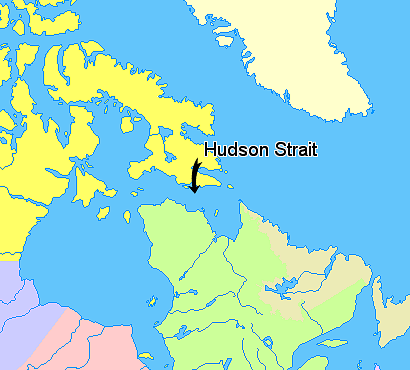
Hudson Strait is a significant waterway in Nunavut, Canada, linking the Atlantic Ocean to Hudson Bay and serving as a vital passage for ships and wildlife.

Explore the internet with AstroSafe
Search safely, manage screen time, and remove ads and inappropriate content with the AstroSafe Browser.
Download

Become a Creator with DIY.org
A safe online space featuring over 5,000 challenges to create, explore and learn in.
Learn more
Overview
Hudson Strait is a big body of water in Canada that connects the Atlantic Ocean 🌊 to Hudson Bay. It’s like a watery highway! The strait is around 200 kilometers (124 miles) long and 80 kilometers (50 miles) wide, making it an important route for ships. Located in Nunavut, a territory in Canada, this strait often has ice floating in it, especially in winter. Many birds and marine animals live in and around Hudson Strait, making it a special place for wildlife. The strait is named after Henry Hudson, an explorer who traveled these waters in 1610!
Read Less
Economic Importance
Hudson Strait is not just beautiful; it’s also important for the economy! 🚢
Many ships travel through this strait, carrying goods and supplies. The area has valuable resources like fish, minerals, and oil. Fishing provides jobs for local communities, while shipping routes help connect remote places to larger markets. Tourism is also growing, as people come to see the stunning landscapes and wildlife. Icebreakers help keep the waters open for shipping even when it freezes over. So, Hudson Strait plays an essential role in supporting the economy and providing jobs for many people! 🛳
️
Many ships travel through this strait, carrying goods and supplies. The area has valuable resources like fish, minerals, and oil. Fishing provides jobs for local communities, while shipping routes help connect remote places to larger markets. Tourism is also growing, as people come to see the stunning landscapes and wildlife. Icebreakers help keep the waters open for shipping even when it freezes over. So, Hudson Strait plays an essential role in supporting the economy and providing jobs for many people! 🛳
️
Read Less
Ecology and Wildlife
Hudson Strait is home to many amazing animals! 🐋
In the waters, you can find seals, whales, and even the mighty polar bear 🐻❄️! The cold water is rich in food, attracting fish like Arctic cod. Migratory birds, such as puffins and ducks, return to the strait during warmer months to find food and nest. The nearby icy shores are crucial for these animals, providing places for them to breed and rest. This strait serves as a habitat for various species, making it crucial for ecology in our world. Protecting this wildlife is essential for maintaining the balance of nature! 🌍
In the waters, you can find seals, whales, and even the mighty polar bear 🐻❄️! The cold water is rich in food, attracting fish like Arctic cod. Migratory birds, such as puffins and ducks, return to the strait during warmer months to find food and nest. The nearby icy shores are crucial for these animals, providing places for them to breed and rest. This strait serves as a habitat for various species, making it crucial for ecology in our world. Protecting this wildlife is essential for maintaining the balance of nature! 🌍
Read Less
Environmental Concerns
Hudson Strait faces environmental challenges. Climate change is melting the ice ❄️ and affecting the habitats of many animals. As temperatures rise, more ships travel through, increasing pollution and the risk of accidents. Overfishing is also a concern, as it can harm fish populations and disrupt the ecosystem. Indigenous communities play a big role in protecting these waters. They are working to find sustainable ways to fish and safeguard their environment. By caring for Hudson Strait, we help protect the unique wildlife and nature in the area today and for future generations! 🌱
Read Less
Geography and Location
Hudson Strait is in northern Canada, between Baffin Island 🏝️ and the mainland of Nunavut. It acts like a door that opens from the Atlantic Ocean to Hudson Bay. The strait is surrounded by beautiful landscapes, including rocky shores and icy waters. To the north, you can find the Arctic Archipelago, which has many small islands. The nearby towns, like Iqaluit, are inhabited by people who enjoy this unique geography. You can see beautiful views of mountains and oceans while exploring the area. With its chilly waters, Hudson Strait is an exciting place for adventurers! 🗺
️
️
Read Less
History of Exploration
Long ago, many brave explorers traveled through Hudson Strait. In 1610, English explorer Henry Hudson discovered it while searching for a shortcut to Asia 🛥️. He sailed on a ship called the Discovery. Although he didn’t find the shortcut, he found the strait! Over the years, other explorers and sailors followed Hudson's route and learned more about the area. The strait was also important for the story of the Inuit people, who lived here for thousands of years. Today, Hudson Strait continues to be an important waterway that tells the tales of those who explored its waters. 📜
Read Less
Climate and Weather Patterns
Hudson Strait experiences cold, harsh weather! ❄
️ In winter, temperatures can drop as low as -30°C (-22°F), causing icy conditions. Summers are much milder but can still be cool. The strait is known for strong winds that blow from the north, creating waves and swells. Snow and ice cover the area for many months. However, summers bring sunlight, which melts some ice, allowing animals to venture out. Understanding the weather helps local people plan their activities, like hunting and fishing. Weather patterns influence the lives of both wildlife and communities living near Hudson Strait! 🌦
️
️ In winter, temperatures can drop as low as -30°C (-22°F), causing icy conditions. Summers are much milder but can still be cool. The strait is known for strong winds that blow from the north, creating waves and swells. Snow and ice cover the area for many months. However, summers bring sunlight, which melts some ice, allowing animals to venture out. Understanding the weather helps local people plan their activities, like hunting and fishing. Weather patterns influence the lives of both wildlife and communities living near Hudson Strait! 🌦
️
Read Less
Transportation and Navigation
Hudson Strait helps ships move between the Atlantic Ocean and Hudson Bay! 🚢
It’s like a big river for boats, allowing them to travel with supplies and goods. The icy waters can be tricky to navigate, so skilled pilots guide the ships through. In summer, when the ice melts, more ships can pass through. Travelers can also enjoy exploring the coast on smaller boats and canoes. Understanding the tides and currents is essential for safe travel in this area. Many people rely on this strait for transporting goods, making it vital for connecting communities and trade! 🌊
It’s like a big river for boats, allowing them to travel with supplies and goods. The icy waters can be tricky to navigate, so skilled pilots guide the ships through. In summer, when the ice melts, more ships can pass through. Travelers can also enjoy exploring the coast on smaller boats and canoes. Understanding the tides and currents is essential for safe travel in this area. Many people rely on this strait for transporting goods, making it vital for connecting communities and trade! 🌊
Read Less
Indigenous Peoples and Cultures
The Inuit are the Indigenous peoples who have lived around Hudson Strait for thousands of years. They have a rich culture that includes storytelling, art, and music 🎨. The Inuit traditionally relied on the land and sea for food, hunting walrus, seals, and whales. They made tools from bone, stone, and wood to help them survive. Festivals, like the Toonik Tyme in Iqaluit, celebrate their cultural heritage with games, dancing, and traditional food. Today, the Inuit continue to teach people about their culture, sharing stories of their ancestors and connection to the land and waters of Hudson Strait. 🎉
Read Less
Cultural References and Significance
Hudson Strait has inspired stories, songs, and art! 🎶
Many Inuit stories share legends about the strait, its animals, and the spirits of the land. Artists create paintings and carvings that celebrate the beauty of this area, often depicting wildlife and the icy landscape. The strait is also mentioned in books about exploration and adventure. It's considered a significant part of Canada’s geography and history. Understanding Hudson Strait helps people appreciate its natural beauty and encourages respect for the cultures that thrive around it. Many keep learning about this remarkable region! 📖
Many Inuit stories share legends about the strait, its animals, and the spirits of the land. Artists create paintings and carvings that celebrate the beauty of this area, often depicting wildlife and the icy landscape. The strait is also mentioned in books about exploration and adventure. It's considered a significant part of Canada’s geography and history. Understanding Hudson Strait helps people appreciate its natural beauty and encourages respect for the cultures that thrive around it. Many keep learning about this remarkable region! 📖
Read Less
Try your luck with the Hudson Strait Quiz.
Try this Hudson Strait quiz and see how many you score!
Q1
Question 1 of 10
Next
Explore More