
Back
Present
Facts for Kids
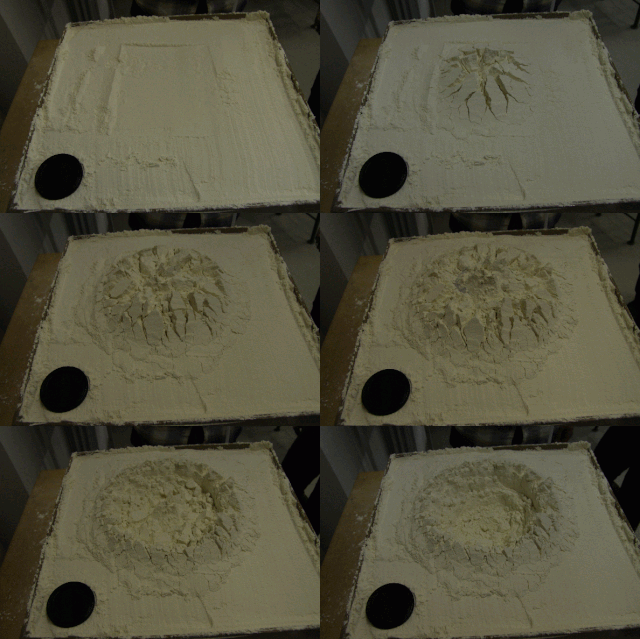
A caldera is a large cauldron-like hollow formed shortly after the emptying of a magma chamber in a volcanic eruption.

Explore the internet with AstroSafe
Search safely, manage screen time, and remove ads and inappropriate content with the AstroSafe Browser.
Download

Become a Creator with DIY.org
A safe online space featuring over 5,000 challenges to create, explore and learn in.
Learn more
Overview
A caldera is a giant bowl-shaped hole that forms when a volcano erupts and empties its magma chamber. 🌋
When too much magma is removed, the ground above it collapses, creating a caldera. Many calderas can be very large, sometimes even measuring several kilometers across! Think about a giant pancake that has a big bite taken out of it. 🥞
This empty space can later fill with water, forming beautiful lakes. Did you know that Yellowstone National Park in the USA has a huge caldera? There are many more interesting things about calderas to discover!
When too much magma is removed, the ground above it collapses, creating a caldera. Many calderas can be very large, sometimes even measuring several kilometers across! Think about a giant pancake that has a big bite taken out of it. 🥞
This empty space can later fill with water, forming beautiful lakes. Did you know that Yellowstone National Park in the USA has a huge caldera? There are many more interesting things about calderas to discover!
Read Less
Types of Calderas
Calderas can be of different types based on how they formed. 🔍
One type is a "volcanic caldera," created by explosive eruptions, like the one at Mount St. Helens in the USA. Another type is called a "resurgent caldera," where the land rises again after collapsing; an example is the Long Valley Caldera in California. 🌄
Lastly, some calderas are formed by less explosive activity, like the ones found in the Hawaiian Islands, where lava flows fill the gaps. Each type helps scientists learn about the Earth’s processes! 🌎
One type is a "volcanic caldera," created by explosive eruptions, like the one at Mount St. Helens in the USA. Another type is called a "resurgent caldera," where the land rises again after collapsing; an example is the Long Valley Caldera in California. 🌄
Lastly, some calderas are formed by less explosive activity, like the ones found in the Hawaiian Islands, where lava flows fill the gaps. Each type helps scientists learn about the Earth’s processes! 🌎
Read Less
Formation of Calderas
Calderas start with a super explosive volcanic eruption! 💥
When the magma rises and causes the surface to bulge, it can build pressure. Once the pressure is too high, the volcano erupts, expelling tons of rock and ash into the air. After this huge eruption, the magma chamber gets empty, and the ground above it collapses, creating a caldera. Scientists think this process can happen quite quickly, sometimes in just a few hours or days! 🌅
Over time, calderas can fill with rainwater or melted snow, turning into lakes or other landforms. Isn’t that cool?
When the magma rises and causes the surface to bulge, it can build pressure. Once the pressure is too high, the volcano erupts, expelling tons of rock and ash into the air. After this huge eruption, the magma chamber gets empty, and the ground above it collapses, creating a caldera. Scientists think this process can happen quite quickly, sometimes in just a few hours or days! 🌅
Over time, calderas can fill with rainwater or melted snow, turning into lakes or other landforms. Isn’t that cool?
Read Less
Caldera Hydrothermal Systems
Did you know calderas can have special hot water systems called hydrothermal systems? 🔥
These systems happen when water interacts with hot rocks underground, creating hot springs, geysers, and steam vents! In Yellowstone, the famous Old Faithful geyser is part of its hydrothermal system! ⏳
Hot springs are colorful and beautiful because of the bacteria living there, and they can reach very high temperatures! 🌈
Hydrothermal systems are exciting places to explore, as they show us how geothermal energy can work in nature. They remind us of the power below our feet!
These systems happen when water interacts with hot rocks underground, creating hot springs, geysers, and steam vents! In Yellowstone, the famous Old Faithful geyser is part of its hydrothermal system! ⏳
Hot springs are colorful and beautiful because of the bacteria living there, and they can reach very high temperatures! 🌈
Hydrothermal systems are exciting places to explore, as they show us how geothermal energy can work in nature. They remind us of the power below our feet!
Read Less
Caldera Research and Monitoring
Scientists work hard to study and monitor calderas to keep people safe. 🔍
They use special tools to measure ground movements, gases, and temperatures. This is called volcanology! 🌡
️ Researchers often set up monitoring stations around calderas, like in Yellowstone, to watch for any signs of an eruption. 📈
They aim to predict volcanic activity early so people can evacuate in time. Continuous research helps improve our understanding of how calderas behave and ensures that communities near these areas are prepared for any surprises from nature. 🌍
They use special tools to measure ground movements, gases, and temperatures. This is called volcanology! 🌡
️ Researchers often set up monitoring stations around calderas, like in Yellowstone, to watch for any signs of an eruption. 📈
They aim to predict volcanic activity early so people can evacuate in time. Continuous research helps improve our understanding of how calderas behave and ensures that communities near these areas are prepared for any surprises from nature. 🌍
Read Less
Famous Calderas Around the World
There are many famous calderas, and each one is unique! Yellowstone Caldera is located in Wyoming, USA, and is known for its hot springs and geysers. 🌡
️ Another famous one is the Santorini Caldera in Greece, which is also home to beautiful blue waters and white buildings. 💙
The Lake Toba Caldera in Indonesia is the largest volcanic lake in the world, and it was created by a massive eruption 74,000 years ago! 🌊
Each of these calderas attracts many visitors who want to see their beauty and learn about their history!
️ Another famous one is the Santorini Caldera in Greece, which is also home to beautiful blue waters and white buildings. 💙
The Lake Toba Caldera in Indonesia is the largest volcanic lake in the world, and it was created by a massive eruption 74,000 years ago! 🌊
Each of these calderas attracts many visitors who want to see their beauty and learn about their history!
Read Less
Calderas in Mythology and Culture
Calderas have inspired stories and legends around the world! 🏞
️ In ancient Greece, the great island of Santorini was believed to be the lost city of Atlantis! 🌊
Many cultures see calderas as sacred places, where the earth breathes and spirits live. In Hawaiian myth, volcanoes are home to the goddess Pele, representing fire and volcanic activity. 🔥
Some Native American tribes consider volcanic regions to be sacred and often share stories about them. This shows how calderas have played vital roles in cultural beliefs and practices throughout history! 💫
️ In ancient Greece, the great island of Santorini was believed to be the lost city of Atlantis! 🌊
Many cultures see calderas as sacred places, where the earth breathes and spirits live. In Hawaiian myth, volcanoes are home to the goddess Pele, representing fire and volcanic activity. 🔥
Some Native American tribes consider volcanic regions to be sacred and often share stories about them. This shows how calderas have played vital roles in cultural beliefs and practices throughout history! 💫
Read Less
Caldera Eruptions and Their Effects
Caldera eruptions can be extremely powerful! 💣
They can send ash high into the sky, affecting air travel and even weather patterns. The 1980 eruption of Mount St. Helens created a caldera in Washington State and changed the landscape forever. 🌪
️ After an eruption, the environment can look different. Plants and animals may need time to regrow, and new habitats can form. 🌱
However, these eruptions can also create fertile soil, which is good for farming later on. The balance of destruction and creation is fascinating when it comes to caldera eruptions!
They can send ash high into the sky, affecting air travel and even weather patterns. The 1980 eruption of Mount St. Helens created a caldera in Washington State and changed the landscape forever. 🌪
️ After an eruption, the environment can look different. Plants and animals may need time to regrow, and new habitats can form. 🌱
However, these eruptions can also create fertile soil, which is good for farming later on. The balance of destruction and creation is fascinating when it comes to caldera eruptions!
Read Less
Geological Significance of Calderas
Calderas are important to geologists because they tell us a lot about the Earth's history. 📜
When a caldera forms, it shows that there was a large volcanic event. By studying these landforms, scientists can learn about past eruptions and the behavior of volcanoes. 🔬
Understanding calderas helps researchers predict future eruptions, which is important for keeping people safe. 🌍
They also offer clues about the movement of magma under the Earth's surface. Overall, studying calderas helps us understand our planet better!
When a caldera forms, it shows that there was a large volcanic event. By studying these landforms, scientists can learn about past eruptions and the behavior of volcanoes. 🔬
Understanding calderas helps researchers predict future eruptions, which is important for keeping people safe. 🌍
They also offer clues about the movement of magma under the Earth's surface. Overall, studying calderas helps us understand our planet better!
Read Less
Wildlife and Ecosystems in Calderas
Calderas can be home to many plants and animals, creating unique ecosystems! 🌿
In places like Yellowstone Caldera, you can spot bison, elk, and bears. These animals thrive in the lush meadows and forests around the caldera. 🌲
The hot springs and hydrothermal features attract various insects and birds too! 🦆
The combination of hot and cold areas creates different habitats. Even after an eruption, life returns over time, showing how resilient nature can be. Studying these ecosystems helps scientists understand how life adapts in challenging environments.
In places like Yellowstone Caldera, you can spot bison, elk, and bears. These animals thrive in the lush meadows and forests around the caldera. 🌲
The hot springs and hydrothermal features attract various insects and birds too! 🦆
The combination of hot and cold areas creates different habitats. Even after an eruption, life returns over time, showing how resilient nature can be. Studying these ecosystems helps scientists understand how life adapts in challenging environments.
Read Less
Try your luck with the Caldera Quiz.
Try this Caldera quiz and see how many you score!
Q1
Question 1 of 10
Next
Explore More